“Do you want to help start a grief camp?”
That’s what Sara Deren, now CEO of Experience Camps, asked me in 2009. She told me she was piloting a program that would bring together boys who had experienced a significant death in their lives.
She picked me because I was a Grief Specialist and had been working with grieving youth and at summer grief camps for several years.
My answer was simple: “Yes. I want to help start a grief camp.”
I already knew how isolating grief can be for young people. It’s confusing, painful, and often invisible. But for boys, in particular, it can be even harder to navigate.
Because many of them have learned to hide it.
When grief turns into anger
When boys do express their grief, it often comes out as anger.
And that makes sense.
For many boys, anger is one of the only emotions they’ve been given permission to show without shame. Sadness, fear, and vulnerability are often discouraged or dismissed. But anger? Anger is allowed.
So grief finds the only exit it can.
Boys may feel angry that their person died. Angry about things left unsaid. Angry that they don’t fully understand what happened or why. Beneath that anger is often confusion, guilt, longing, and deep sadness—but without space or language for those feelings, anger becomes the container.
The problem is what happens when that anger has nowhere to go.
Left unaddressed, it can escalate into explosive outbursts, physical aggression, or self-destructive behavior. Over time, it can lead to damaged relationships, emotional volatility, anxiety, depression, and challenges at school and at home.
When we ignore boys’ grief, we don’t make it disappear. We just change the way it shows up.
Building a place where boys don’t have to hide
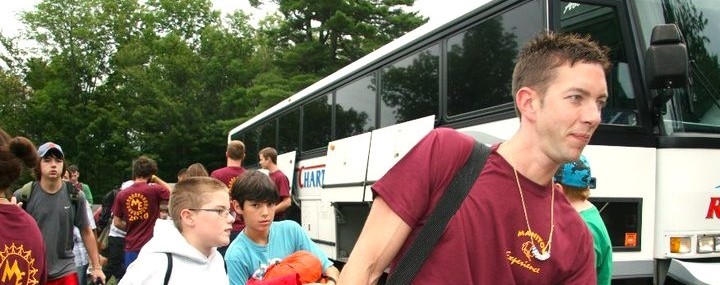
In that first summer of Experience Camps, 27 boys—ages nine to 13—got on a bus and came to a free, one-week grief camp we designed just for them.
We knew we couldn’t just ask them to sit in a circle and talk about their feelings all day. That’s not how boys connect, and it’s not how trust is built.
So we created something different.
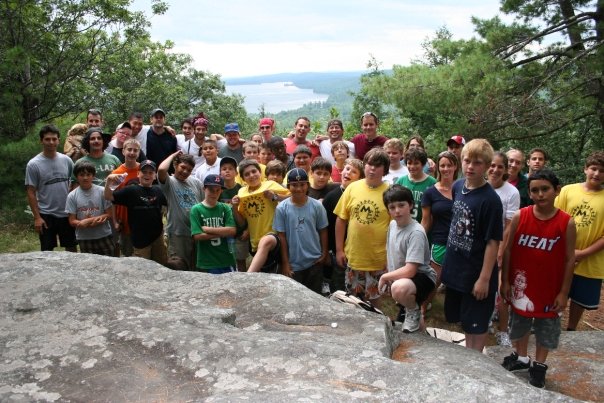
We filled their days with the kinds of camp activities kids naturally gravitate toward—swimming, kayaking, art, games, laughter. And alongside that, we created space for them to share their grief with trained clinicians in sharing circles, and with each other.
The “special sauce” was that both things mattered equally.
They got to be kids. And they got to be grieving kids.
The moment everything shifted
One of the most powerful moments that week happened around a campfire.
Each boy said the name of the person who died. One by one, they spoke. And as they did, something shifted. They looked around and saw other boys who understood, without explanation.
They weren’t alone.
At one point, without any prompting, they began putting their arms around each other. Boys who, just days earlier, might not have said a word about their grief were now standing together, openly connected in it.
For that moment, they didn’t have to carry it by themselves.
Following their lead
That first week taught us something important: the boys would tell us what they needed, if we were willing to listen.
After the first sharing circle, they asked for another one.
So we added it.
We saw how much it mattered for them to have counselors who could model emotional expression—who could be goofy and playful, but also honest and open. We saw how powerful it was for boys to be given permission to feel without being judged or rushed.
Over time, we built more Experience Camps programs that followed their lead.
Today, Experience Camps serves hundreds of boys across the country. Many come back year after year. They count down the days until they can return, reconnecting with what they often call their “brothers.” They stay in touch outside of camp, building relationships that extend far beyond that one week.
Getting underneath the anger
But this kind of transformation doesn’t happen overnight.
For some boys, it takes multiple summers before they begin to put words to what they’re feeling. And that’s okay.
We’re not there to fix them. We’re there to plant seeds.
A big part of that work is helping boys move underneath anger, not by shutting it down, but by making space for it.
At camp, anger isn’t something to be punished or avoided. It’s something to be understood. When boys feel safe enough, and when they see others doing the same, they begin to recognize what’s beneath it—sadness, fear, love, and loss.
They start to realize that anger is not the only option. That awareness changes everything.
Why this matters
As much as I believe in the power of camp, the real impact goes beyond any one program.
What changes boys’ lives is learning that it is brave and wise to acknowledge their feelings out loud. That their emotions are not something to hide or be ashamed of. That someone can hear their story and hold it with care.
It’s not about having the perfect words or getting every conversation right. It’s about creating spaces where all feelings are allowed—and where no one has to carry grief alone.
Because when we give boys permission to feel more than anger, we don’t just change how they grieve.
We change how they move through the world.
Ryan Loiselle, MSW, LICSW has been working with bereaved children and teens for over 25 years at FRIENDS WAY in RI, Experience Camps and in his private practice, Rhode Island Grief Counseling in Providence, RI.
Want to learn more about how boys and young men grieve differently, why it matters, and what we can all do? Follow our Male Grief Campaign on Instagram, Facebook and our blog. We’ll be sharing diverse voices and experiences all month long. If you’re interested in mentoring boys by volunteering at Experience Camps, visit here.

This is so wonderful . Right boys are not conditioned to express their feelings and emotions.As a therapist , I know boys who have not dealt with their loss of a parent thru death or divorce until they are an adult and enter counseling. Spread this message everywhere that losing a main family member is traumatic and unsettling and participating in counseling or attending grief camp can help them learn to name it and deal with the various parts of it .