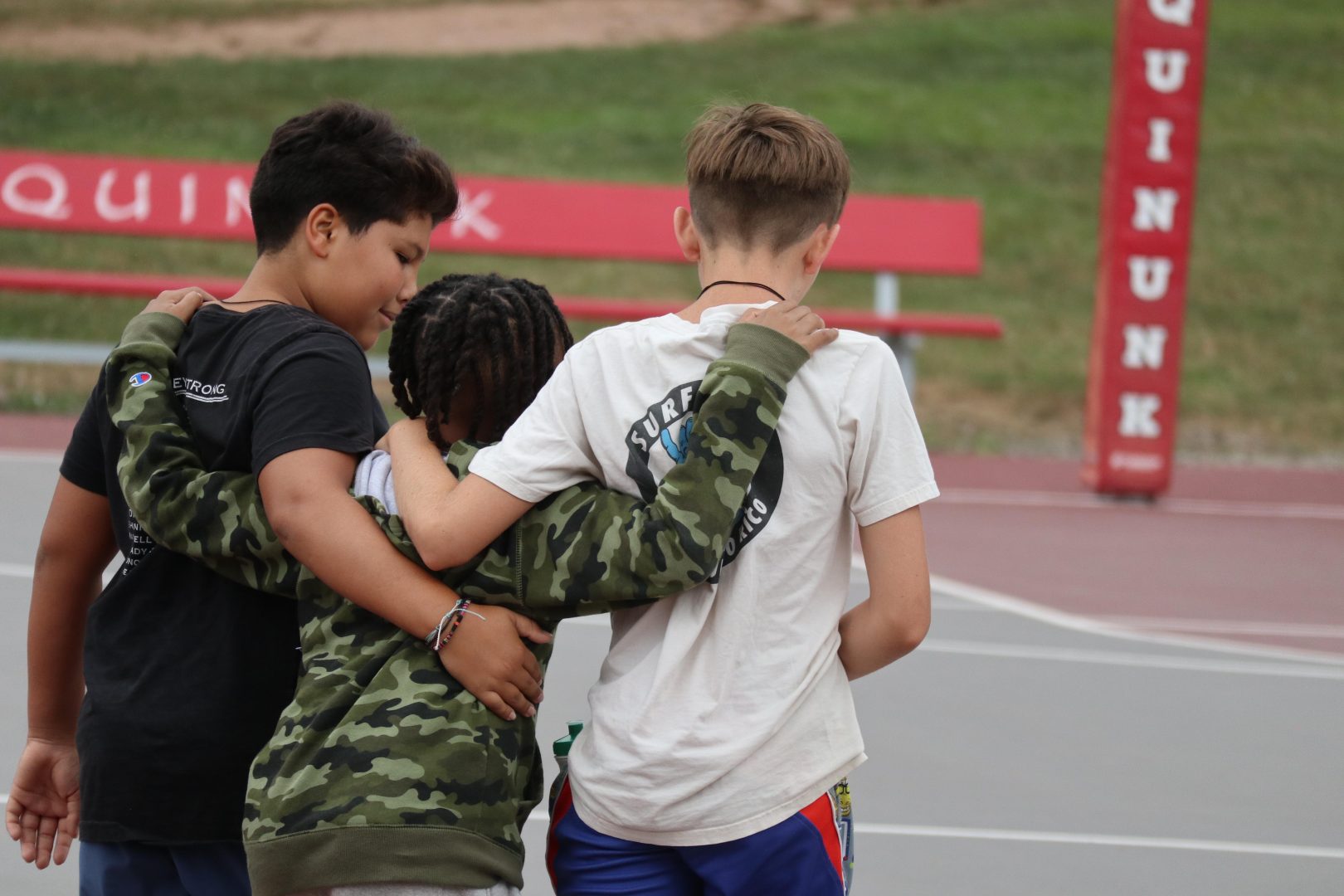
At Experience Camps, we’ve worked with thousands of grieving kids and teens. We know grief can feel lonely and isolating, and for boys and young men, there is often an added pressure to ignore or hide what they’re feeling.
At our one-week camps, boys are given a rare opportunity to share and express their emotions in male-only spaces. Even so, this pattern of concealing feelings still shows up. To better understand it, we spoke with four of our teen campers about what it’s like to navigate grief as a boy.
Below are excerpts from conversations with Alex (16, whose dad died in a car accident when he was 6), Javier (15, whose dad died from cancer when he was 10), Jaymul (17, whose dad died in a crocodile attack when he was 7), and Jonah (15, whose mom died from cancer).
Why we hide our grief
“As a guy, I am expected to be a strong emotional pillar for the people around me. When people see cracks in a pillar, most of the time it’s complaints that the pillar is too weak. So men put on brave faces to hide the cracks.” — Alex, 16
“As young men, we are told not to cry. We’re told crying is for babies and wussies, and that it’s a feminine characteristic.” — Jonah, 15
“From a young age, boys are often told to ‘man up,’ stay tough, and avoid showing vulnerability.” — Jaymul, 17
“Societally, we are typically expected to conceal our feelings… it can feel impossible to express them outside of certain spaces.” — Javier, 15
How we hide it
“Boys are often encouraged to channel emotions into anger, humor, or silence instead of actually processing them.” — Jaymul, 17
“When I came back from school one day after feeling upset, I cried ugly tears, releasing all the stress I had bottled up. It felt good to finally let go instead of staying strong. Even the strongest pillars have cracks.” — Alex, 16
“One night, months after my mother passed, I crawled out of bed, sat against the bed frame, and cried. After I was done, I vowed to never cry about my mother again. I cannot explain how much I regret that decision.” — Jonah, 15
Why spaces like Experience Camps matter
“By being surrounded solely by other boys who are grieving at camp, it allows us to express our emotions in a way that would literally be impossible outside of camp.” — Javier, 15
“Everyone has emotions, so why am I not allowed to have them? Going to camp has taught me an important lesson: it’s okay to cry.” — Alex, 16
“Spaces like camp matter so much; they challenge expectations and show that expressing grief isn’t weakness, it’s actually strength.” — Jaymul, 17
Grief is already heavy. No one should have to carry it alone—or in silence.
To hear another perspective, we asked teen girls at Experience Camps what they notice about how boys grieve. Read what they shared.
Want to learn more about how boys and young men grieve differently, why it matters, and what we can all do? Follow our Male Grief Campaign on Instagram, Facebook and our blog. We’ll be sharing diverse voices and experiences all month long. If you’re interested in mentoring boys by volunteering at Experience Camps, visit here.
