
After the death of my father at 16, I remember people in my life, close and distant, inviting me to step into the role of “man of the house.” This message felt confusing–creating pressure and expectations I wasn’t ready to meet.
I just wanted to be a normal teen, and grieve by escaping into the one place I felt comfortable: playing drums!
I remember taking on household projects out of my comfort zone, fixing or repairing things, and taking too much on my plate because “men find a way.” Messing up these projects, or saying no, felt like I was failing my family—and my ability to step up as a man.
Later in life, as I unpacked my experience, I noticed that the pressure to “step up” created habits that caused me anxiety. In turn, this led me to feel resentful in personal relationships. Looking back, it was easy to notice where my habits of perfectionism, and saying no to requests had come from.
To be fair, I also credit this time in my life with developing many of my strengths—resilience, emotional intelligence, and empathy—which impact my work today.
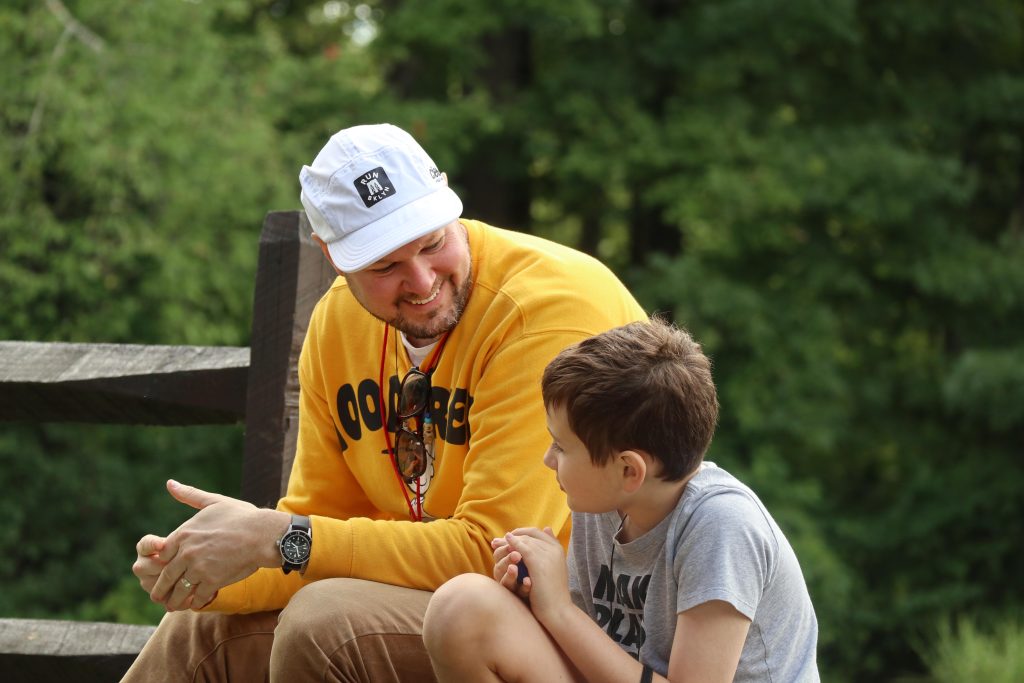
Author Brendan Finnegan, LCSW, Clinical Director for boys at Experience Camps in Pennsylvania
The problem with asking boys to be the “man of the house”
Now, as a male-identified therapist who specializes in grief and loss, I regularly see how gender expectations show up after the death of a parent, often a father. Many boys, like I did, feel pushed to become the “man of the house.”
Sometimes this message is explicit. Other times, it’s coded as “step up” or “take care of your mom” or “be strong for your siblings.”
This expectation is reinforced in media and culture, where boys are often positioned as the protector or the stable presence for the family. Boys who feel pressure to grow up too fast, to perform adulthood while they’re still children, can often suffer.
They can start to believe it’s their job to fix problems that belong to adults.
Over time, sacrificing their own emotional and physical needs for the sake of the family can lead to anger, resentment, and confusion. It shapes how they understand themselves and their role in the world.
What can we do to change the paradigm?
All of us experiencing grief can benefit by being curious about our new place in the world after a loss. We can also explore how that is impacted by gender and stereotypes. A powerful first step is to acknowledge there is no need to “have a man in the house.” Many successful, healthy, and resilient family configurations outside of two-parent households exist!
Through my work with Experience Camps and with teen boys, I’ve seen how important it is for children to hear that their growth comes from being who they are—not from trying to fill an adult role.
They need permission to be children.
3 ways we can help boys unlearn “be the man of the house”
1. Offer yourself grace, validate yours and your child’s feelings
You’re human! If you’ve told or implied to a boy that he needs to be the “man of the house” that’s ok. These messages are all around us, and it takes time for us to unlearn them. Validate the complex feelings that arise after loss for you, and your child.
Remember, you don’t have to navigate this alone. Support from a grief-informed therapist can help you feel grounded as a parent, friend, or caregiver.
2. Ask your child how that message felt
Starting this conversation may feel uncomfortable, but can be important to creating repair.
If you told him to “step up,” you might say:
“I’m sorry. I’ve thought about it, and remembered that it’s not your job to be the man of the house. You’re still a kid.”
If someone else said it, you could ask:
“I heard someone say you needed to step up for the family. What was that like to hear?”
Let them tell their story. Having you listen can be powerful!
You can also help them name what comes up – sadness, anger, guilt, even relief. It’s ok to share about your experience as well.
3. Be clear about your child’s role: they are the child
Remind them, directly and often, that they are not responsible for taking on adult roles or responsibilities.
You might say:
“I’m the parent. It’s okay for you to be a kid. It makes sense that you want to take care of me, but I am safe and supported at this moment.”
Reminding a child that you are supported and capable of finding your own support can be reassuring, and it models something important: that it’s healthy to share needs and lean on others.
Remember these conversations don’t have to be perfect for them to have a positive impact on the experiences of you and your child.
In my experience, kids of all ages can recognize and talk about the messages they receive about how they’re supposed to act. Stay curious. You don’t need all the answers.
Think of this as opening the door to a more honest relationship—one where both of you get to share your experience.
 Brendan Finnegan, LCSW, is a social worker and the Clinical Director for Experience Camps in Pennsylvania. He supports children, adolescents, adults, and families who have experienced trauma and loss. He currently provides therapeutic services focused on grief and loss through Wolfson Therapy in New York City, and is the owner of Impact Group Drumming.
Want to learn more about how boys and young men grieve differently, why it matters, and what we can all do? Follow our Male Grief Campaign on Instagram, Facebook and our blog. We’ll be sharing diverse voices and experiences all month long. If you’re interested in mentoring boys by volunteering at Experience Camps, visit here.
