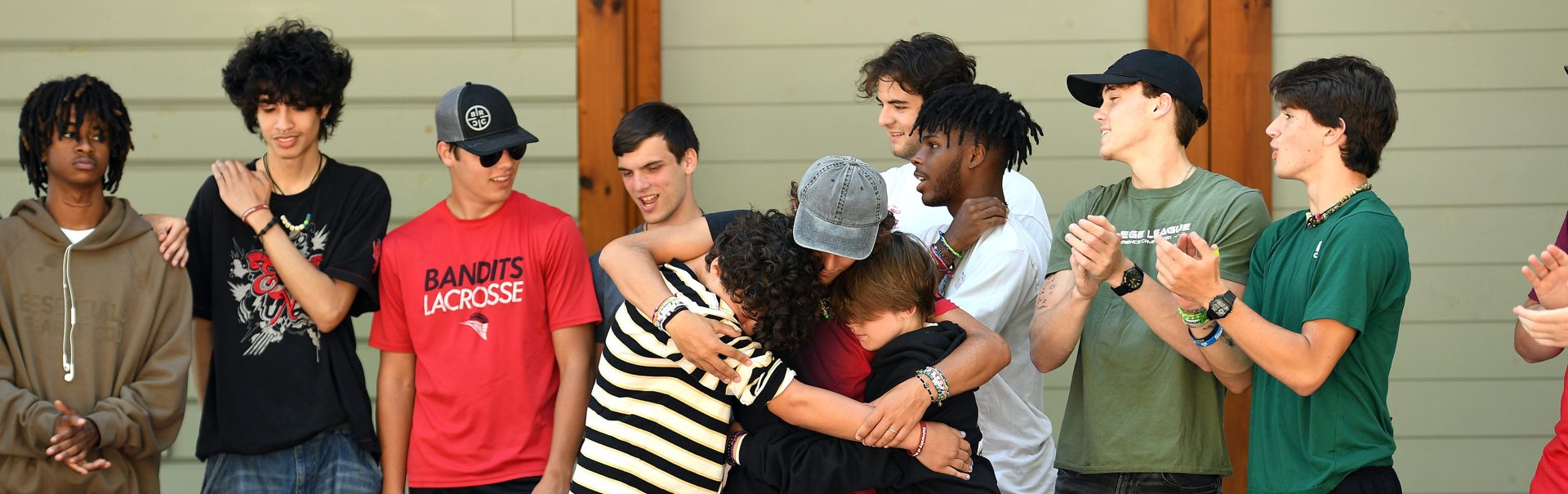
Experience Camps has always felt like a temporary alternative world. A place where, instead of it being taboo for boys and men to talk about our feelings…that’s literally what we’re here to do.
It’s a big part of what makes camp so special, and why so many campers and volunteers return year after year.
Outside of camp, many boys grow up in environments where talking about uncomfortable emotions simply isn’t done. So they struggle quietly, unable to express what’s really going on inside.
And sometimes, here’s what’s going on for young men that we don’t talk about publicly:
- we’re struggling
- we’re worried about money
- we’re not okay after a breakup
- we don’t know who to turn to, especially if we experienced the death of a father-like figure
- we don’t know how to tie a tie (more on this later)
When young men don’t give themselves space to share authentically with other men, those feelings can surface in unhealthy—sometimes dangerous—ways. That’s why this work feels especially important for our oldest campers: our Leaders in Training (aka LITs).
LITs are young men ages 16-18, who, like every camper at Experience Camps, have experienced the death of a caregiver or a sibling. In addition to coming to camp to grieve, many are starting to think about the next stage of their lives—what they want to do, and who they want to become.

Author, Brian Helfman (2nd from right on top row), with LITs at Experience Camps
One way we support them is through an evening activity called: Adulting 101
The intention is simple: build organic mentorship opportunities between LIT campers and counselors to help prepare these young men for life beyond camp.
Here’s how we do it:
We split the LITs into groups and rotate them through 15-20 minute stations, each facilitated by three to five counselors. These topics have been chosen by campers and counselors together, and reflect what 16-18 year old boys actually want to talk about.
Over the seven years that we’ve done this activity, stations have included:
1. Life After High School
We discuss navigating the transition into adulthood, whether that means college, trade school, work, or the military. We help LITs figure out what they want to pursue in a world full of expectations. I love hearing the wildly different ideas that campers bring to the table—and seeing them get inspired by one another’s hopes and dreams.
2. Basic Money Knowledge
An introduction to financial literacy: saving, budgeting, and investing. One camper, inspired by what he learned about the power of compound interest, opened an investment account when he was 18. Now he’s a volunteer counselor who comes back every year, excited to show off the growth of his account, now worth thousands of dollars.
3. Healthy Masculinity & Relationships
We always invite two female counselors to join this one, for an open conversation about dating, respect, and relationships, inclusive of all identities and orientations. Here, I’ve seen young men cry and bond over heartbreak, committing to grow into better partners.
4. Health & Wellness
We talk about nutrition, forming healthy habits, and the importance of staying active (like we are at camp) back home. I’ve heard campers who vape talk about how refreshing it is to be at camp without access to their devices—and how they plan on holding each other accountable to staying off the substances they know aren’t good for them.
5. Tying a Tie
Always a crowd favorite and a nice break from sitting and talking for a more playful, hands-on activity. Counselors bring ties they’re willing to part with, and campers leave with a practical skill—and often a tie they get to keep.
But the real magic of Adulting 101 isn’t the topics. It’s how each station is facilitated. Counselors aren’t there as the “sage on the stage” delivering lectures with all the answers. They’re a guide on the side, creating a space where conversations are driven by curiosity. Everyone is included. Everyone contributes. And importantly, everyone gets pizza.
A model that can travel beyond camp
Adulting 101 works because it creates something many young men rarely experience: a space where they can be real, without judgement. The good news is, this doesn’t have to be limited to camp. If you have a young man in your life who you want to support,adopt the mindset of a Leader-in-Training.
Here’s what that can look like:
- Show up authentically. Don’t try to be an expert.
- Show genuine curiosity & care. Be interested, not just interesting.
- Listen more than you speak. Ask questions that get him talking.
- Find ways to relate. Share parts of your story that might be helpful.
- Don’t ask him to be different to meet your expectations. Meet him where he is.
- Earn trust by showing up consistently.
When we lead in these ways, we help young men do the same—and grow into the kind of leaders our communities need.
Brian Helfman started volunteering with Experience Camps in 2016, has served as LIT (Leadership in Training) Unit Leader at our camp in Pennsylvania since 2018, and helped launch our Adult Retreat in 2022. Outside of Experience Camps, Brian is the Founder & CEO at Third Nature, a company that runs team development workshops and adult summer camps. He graduated from the University of Michigan’s Ross School of Business in 2011, and now lives in Brooklyn, NY with his wife and one-year-old son.
Want to learn more about how boys and young men grieve differently, why it matters, and what we can all do? Follow our Male-Grief Campaign on Instagram, Facebook and our blog. We’ll be sharing diverse voices and experiences all month long. If you’re interested in mentoring boys by volunteering, visit here.
