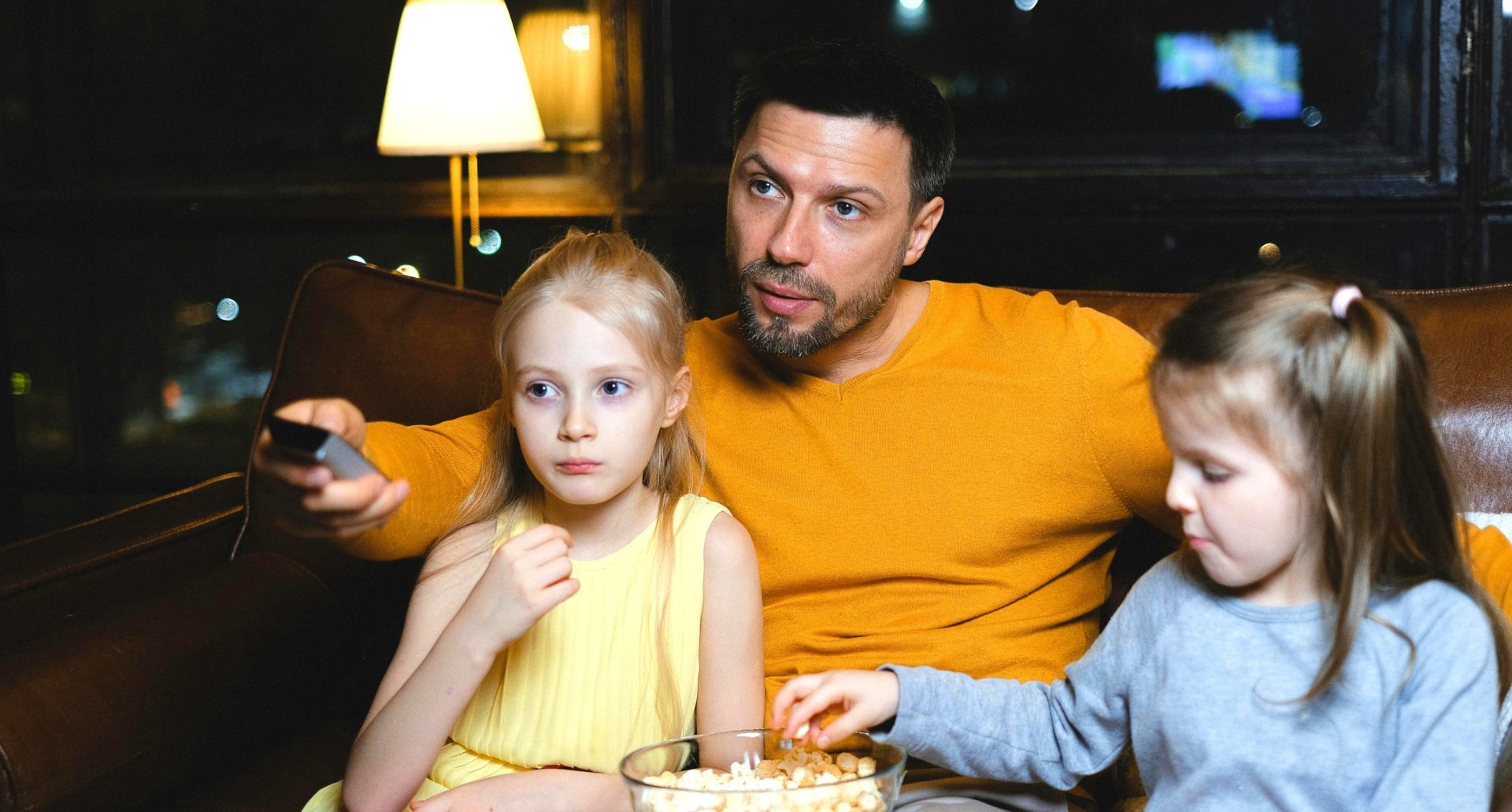
Q: My grieving child got scared while watching an unexpected death scene! What should I do?
A: There you are settled in with your child, watching a relaxing movie or TV show, and suddenly your child gets anxious for what seems like no reason. Then, you put it together that it was a death scene or maybe something more subtle, something on screen that reminded your child of their person who died. Now they are upset or worse. What should you do? Do you turn off the show/movie? Try to have a conversation? Stay silent? Here are six steps you can take to turn the situation into a positive one.
Step 1: Take a breath. Bringing more panic to the situation is not going to help.
Step 2: Know you are not to blame here.
Please set aside the self-blame if you can. Sure, you love your child, and you don’t want them to feel “bad.” But I prefer not to label things as “good or bad, right or wrong,” especially when we talk about emotions. In fact, this may even be a good opportunity to explore some of your child’s unresolved feelings.
Step 3: Start the conversation with a question.
Ease in gently by asking something like; ““Hey, it seems like you are feeling uncomfortable; is that true? Do you want to share what you’re feeling?” Or, you can try, “I’m having the feeling you are not feeling good; am I assuming?” If they question why you’re asking, share your feelings upon what you are observing and your concern. For a parent, it is highly important to model the example; and showing your emotions and expressing them improves the communication between you and your child. This is true even if you have very different perceptions of what happened on screen.
Step 4: Remind yourself this is not about logic.
I remember when I saw my sister feeling anxious when we were watching a movie scene involving death and blood. Her reaction was to tuck herself into the corner of the sofa. Also, she started trembling and saying the word “no.” At that time in my life, I did not have the resources I have now, and I tried to force her to realize that it was fake blood worn by actors. She replied as, “still, they are dying” and “they are still acting dead.” Now I know that her perception of it was completely different from mine, and she was feeling it. It gave me a new appreciation for the fact that this wasn’t about logic.
Step 5: Help your child feel where the fear or sadness is in their body.
If your child shares their feelings, you might want to ask where in their body they are feeling the emotion. Locating it–whether it’s in their heart, stomach, chest, wherever) is another way to mindfully navigate through the anxiety they are experiencing. You can then ask them if they’d like to pause and talk about what happened on screen that was upsetting. Remember the goal is to be a facilitator in the process. This is an opportunity to learn ; not only for your child, but also for you as a parent or caregiver.
Step 6: Give the control to them if you can.
Finally, a last thing to consider is if your child asks to turn off the show or movie; do so; and if you are in a movie theater ask them what they want to do. This is about focusing on them and their needs; we as adults may think or be prone to decide based on our own experiences or needs. And one final reminder that this exchange can be a beautiful opportunity to build your relationship so go easy on yourself.
Héctor L. E. Olivencia Huertas is a Doctor of Clinical Psychology in Puerto Rico, who started with Experience Camps in 2022 as a staff member and is now a Grief Specialist at Experience Camps in Georgia. IG: @almostdr.h; LinkedIn: Hector L. E. Olivencia
