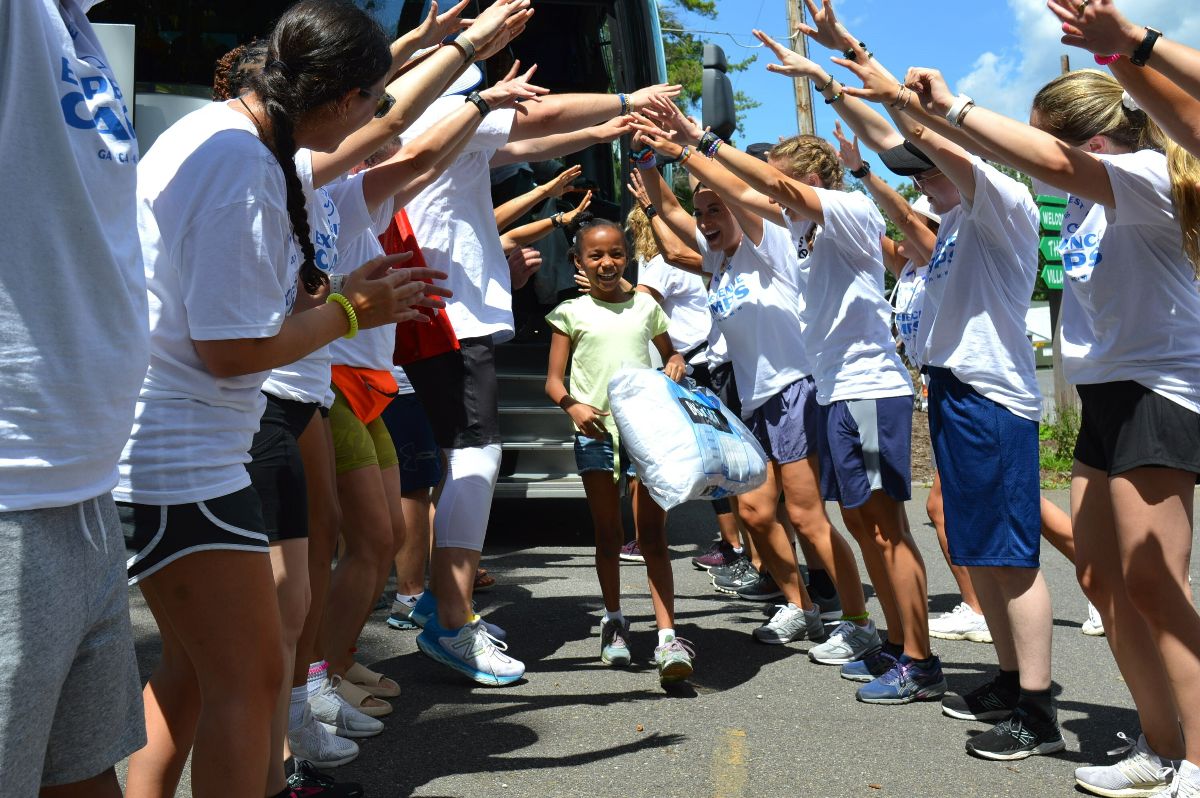
Camp season is in full swing. We’ve got 14 week-long programs running across the country this summer—including a brand-new one in Connecticut! And while it’s full-on s’mores, chant battles, and muddy relay races out here, we wanted to pull back the curtain and share what’s really happening behind the scenes.
This isn’t just summer camp. It’s a grief-informed, clinically supported space that’s designed—from the cabin experience to the storytelling campfires—to help grieving kids feel like kids again.
1. Play isn’t just encouraged here; it’s baked right into the model.
When you walk onto one of our campgrounds, it looks and sounds like any other summer camp. Screen doors slamming, kids running wild, songs echoing through the campgrounds. Basketballs bouncing, friendship bracelets being made, squeals from kids tubing on the lake. Laughter everywhere.
But what you might not see right away is the intentionality behind it all.
That unstructured play? It’s a bridge. It gives kids a way to connect immediately without having to explain themselves and to start building trust, comfort, and community before sharing their grief story.
The bunk setup? It’s designed to create a mini family, where campers learn how to live alongside others, solve conflicts, and support each other. Even the nightly campfire isn’t just for roasting marshmallows; they are times for reflection and checking in to their feelings after a day full of play, where feelings often rise gently to the surface.
2. The fun is real, and it’s clinically informed.
Each camp program is overseen by a Clinical Director, a licensed therapist who leads a team of clinical staff. Every cabin has assigned grief specialists who support campers emotionally, guide grief-based activities, and create peer spaces for sharing and processing. They’re the quiet engine making sure that the camp’s lightness also has depth, and that children are learning how to navigate their grief with strategies they can bring back home.
We don’t have the same emotional goals for each child by the end of the week. One camper might say their person’s name out loud for the first time. Another might open up about how exactly their person died and what it felt like to find out. Both are enormous steps. We’re not chasing one outcome, we’re looking for growth; grief is different for everyone. And since the average camper comes back for five years, we know they’ll keep learning new insights and ways to process. What grief looks like at nine can be completely different at twelve. We’re here for all of it.
3. And maybe most importantly: We give grieving kids permission to just be kids again.
When a child experiences the death of someone close, childhood can take a backseat. They often get handed adult emotions, adult worries, and adult expectations. At Experience Camps, we take some of that weight off.
We hand them a bouncy ball, a microphone, a goofy costume. We invite them to sing like maniacs, cannonball into the lake, and care way too much about “College League” (our camp olympics).
In doing so, we’re not just giving them a fun week. We’re helping restore what their experience likely paused: joy, silliness, belonging, and the freedom to just be.
Michelle Cove is the Communications Manager at Experience Camps. She is an award-winning documentary filmmaker, journalist, and national bestselling author whose projects have been featured on numerous national platforms including “The Today Show,” The Washington Post, The Boston Globe, and The New York Times. Visit www.michellecove.com to learn more.
