
Shortly after returning from serving as a Senior Grief Specialist at Experience Camps last summer, I received a text message early one Sunday morning that made my heart stop. Several friends reached out to let me know that a good friend of mine, someone who was truly like a brother since meeting him in high school, had been admitted to the ICU and was suffering from liver and kidney failure. In the days that followed, friends and family gathered at his bedside. Despite everyone’s hopes and prayers, his body couldn’t recover. Just a few days later, surrounded by love, he died.
The following weeks were a haze of heartbreak and huge waves of disbelief. I’d just come from spending a week at camp supporting boys through their own experiences of loss, helping them find language for their grief, create rituals for remembrance, and recognize that they weren’t alone. And suddenly, I found myself having to apply those same lessons to my own life in real time.
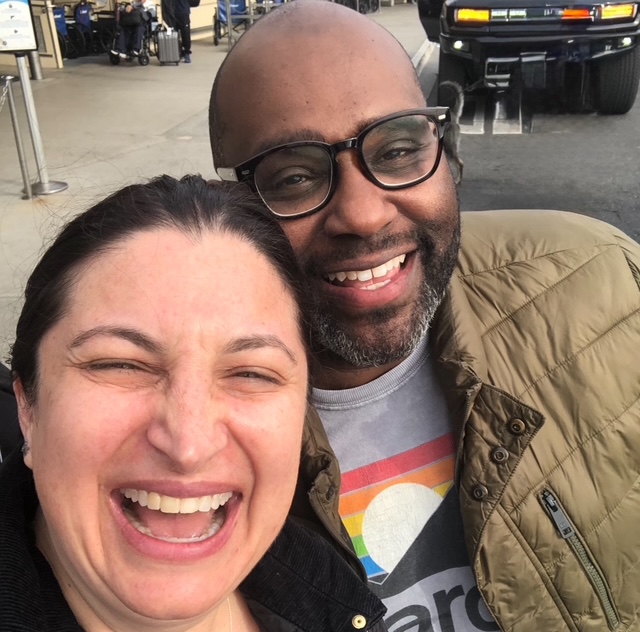
“Grieving my friend who died (on right in pic) feels both intensely personal and strangely invisible.”
When Grief Has A Hierarchy
One of the most challenging parts of losing a close friend is that society doesn’t always recognize that grief as legitimate. There are systems and rituals designed for family members, not necessarily for friends, even those who were as close as family.
I experienced this firsthand when I tried to change an existing airline flight so I could attend his Celebration of Life ceremony. The airline required documentation like a death certificate or proof of immediate family status before approving the change. I remember sitting on hold with the airline, feeling both helpless and angry. How could I prove the depth of a friendship? How could I explain that “friend” didn’t begin to capture what he meant to me, and yet, in the eyes of corporate policy, it wasn’t enough?
I also struggled with how and when to contact his family. I wanted to reach out, to offer comfort, to share how much he meant to me. But I didn’t want to intrude during their rawest moments of grief. I debated for days whether I should send a message? Should I wait? Even sharing the news with others felt complicated. Was it my place to do so?
These moments highlighted a truth that many people who’ve lost a close friend come to understand: grieving a friend can feel both intensely personal and strangely invisible.
Why the death of a friend hurts so deeply
Friends are the people we choose. They’re often the ones who show up for us when life gets hard, who know our stories, our humor, our flaws, and our hearts. They become woven into our daily lives and routines.
When a friend dies, we not only lose them, we lose the version of ourselves that existed in that friendship. The person who made us laugh a certain way, who encouraged us to take chances, who remembered our inside jokes or our favorite songs. It’s a kind of loss that can feel disorienting, because it touches so many layers of identity and belonging.
And yet, because our society tends to prioritize family roles in grief rituals, friends can sometimes feel left on the sidelines, unsure of where they fit in, what’s appropriate, or how to express their pain.
Tips for navigating the grief of a friend
If you find yourself or your child grieving a friend, here are a few things that may help navigate the journey ahead.
1. Acknowledge that your grief is valid.
You don’t need to be a family member to feel a deep loss. Give yourself permission to grieve in your own way, without comparison or justification.
2. Reach out to others who knew your friend.
Sharing memories can be healing. It helps you feel less alone and honors your friend’s legacy through connection.
3. Find gentle ways to honor them.
Light a candle, create a playlist of songs you shared, write them a letter, or do something kind in their memory. Rituals matter, even informal ones.
4. Be mindful but brave in reaching out to family.
A simple message like, “I loved [their name] deeply and am thinking of your family” can be both respectful and comforting. Most families appreciate hearing how much their loved one meant to others.
5. Give yourself space to feel.
Grief may come in waves, some days heavy, others lighter. Allow the feelings to move through you rather than trying to contain or control them.
6. Seek community and support.
Whether it’s through a grief group, a grief camp like Experience Camp, or a trusted therapist, having people who understand loss can make an incredible difference.
If there’s one thing I’ve learned through both my professional and personal experiences, it’s that grief has no hierarchy. The heart doesn’t measure loss by titles like “family” or “friend.” It measures by connection, love, and shared experience. If you’re reading this and grieving the loss of a friend, please know this: your grief is real, your love mattered, and your healing will take time, and that’s okay.
 Samantha Peller is a Behavioral Specialist at Experience Camps in Pennsylvania and a Senior Grief Specialist at Experience Camps in Connecticut. She has also served as a Licensed Creative Arts Therapist and Registered Drama Therapist, bringing creativity, empathy, and playfulness to every space she enters. She has worked with children, adolescents, and adults in various clinical settings, helping them express and process emotions through the arts, connection, and storytelling. Learn more at www.soundslikesunshinevoiceovers.com.

Brava!! Well-written and powerful!